This month, I attended KubeCon + CloudNativeCon NA in Atlanta. I had heard many good referrals about this conference, but for various reasons, I wasn’t able to participate until this year, and what better chance to celebrate 10 years of the cloud native foundation. I was expecting a huge event, full of open source projects and the most important tech organizations participating, and I was not disappointed; on the contrary, it exceeded my expectations in many ways, not only because I was able to learn the latest about the Kubernetes and CNCF projects, and able to hear from the very first what is coming, but also for the majestic welcoming from the community and organizers.
KCDs present
Besides covering the event as press (Software Guru), I was part of the KCD Texas and KCD Mexico organizers. I connected with many KCD co-organizers from every corner of the world. We had a great time sharing experiences, while we invited the participants to join us and participate in the different KCDs.
To my gratefulness, I had the chance to meet in person members of the different Latam KCDs, with whom I had collaborated before. The day we presented Latam, together with KCD Texas and Miami, the KCD kiosk looked like a “Latinos party”, sharing the friendship and camaraderie we have.
The exhibition floor
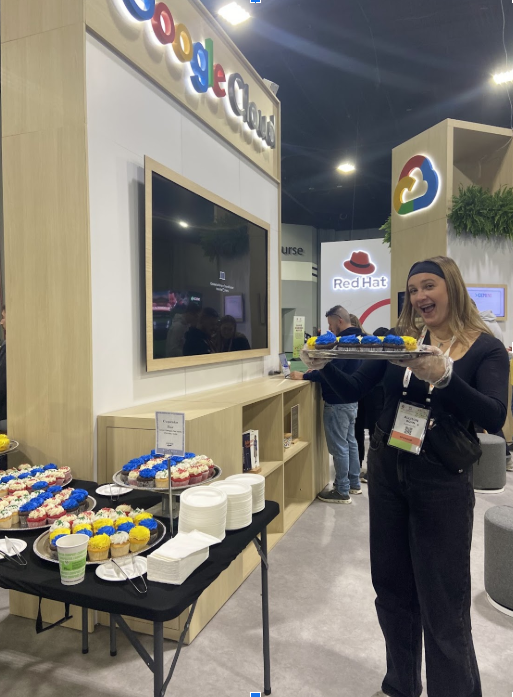
I was riding a scooter the first day of the event, which allowed me to go throw the entire Exhibit floor, where I was able to visit many booths, and to meet many interesting and king people. I was amazed by many booths, but I definitely have to mention three of them: Solo.io for their huge space for demos held one-by-one, Google booth for giving amazing talks and demos, and I give the first place on original design to the Edera booth for having the place we all want to be: “the beach”.
The community
Open Source communities never cease to amaze me, inside the fostering collaboration they allow the innovation to fulfill the projects, while promoting transparency. There were many spaces for sharing our voices and learn from each other, and this made me feel safe and mindful. I echo Lin Sun, whom I deeply admire, when she said: This community has taught me to be kind to everyone, regardless of who they are or where they come from.
Many thanks to the organizations supporting cloud native projects, and my full appreciation to the community for being the fundamental pillar in the open source creation.

The speakers
I was invited to an observability panel, where the discussion focused on how it is the “eyes and ears” for AI systems, making sure they are reliable, efficient, and safe. I was gratefully surprised by the participation of Bianca Lewis, leader of the Open Search Software Foundation, who led the talk and directed the conversation on how observability can become integral to business operations.
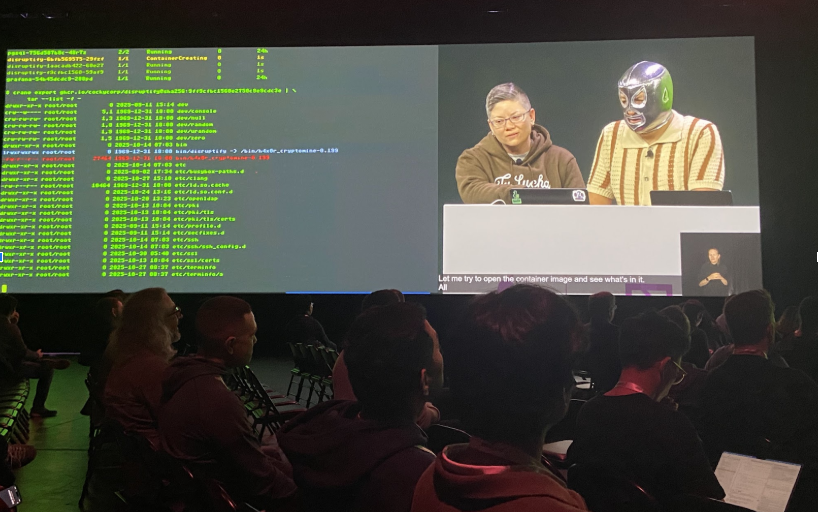
I loved the keynote sketch by Stacey Potter and Adolfo García, impersonating a Mexican wrestler, showing us that Kubernetes is difficult, and all the participants are superheroes for the struggle supporting Kubernetes at their respective companies.
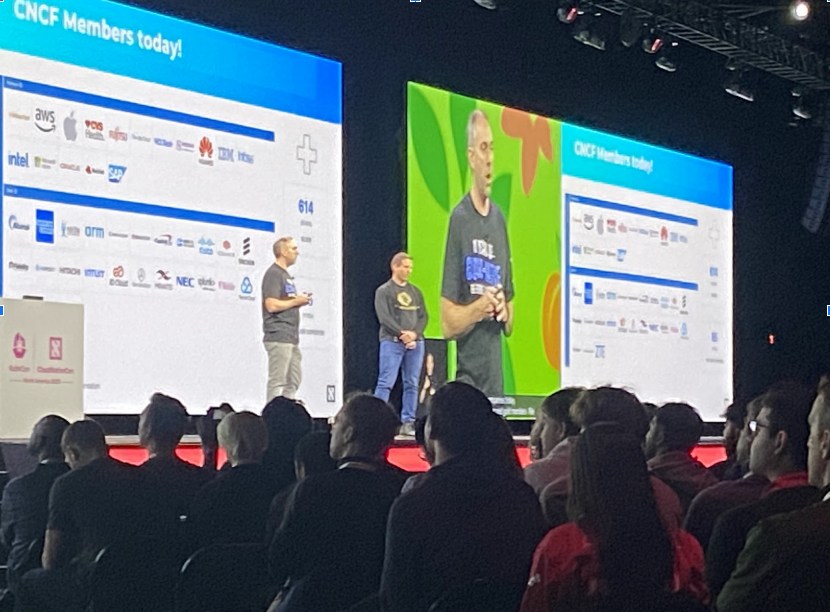
The final day of keynotes was awesome, where DRANET was being donated to the CNCF live on stage. Thank you to Antonio Ojea, Lionel, and all the other great presenters.
All my admiration and congratulations to Lin Sun on becoming the newest KubeCon+CloudNativeCon co-chair!
Major themes shared
The central narrative of KubeCon NA 2025 shifted from “getting Kubernetes running” to “optimizing and securing cloud-native at scale,” with a heavy emphasis on AI integration and developer experience.
- Platform Engineering Dominance: The concept of Internal Developer Platforms (IDPs) and Platform Engineering was no longer a fringe idea, but the accepted best practice. The focus is now on delivering highly automated, secure, and opinionated paved paths for application teams, abstracting away Kubernetes complexity.
- Key Tools Mentioned: Backstage, Crossplane (especially for provisioning cloud resources).
- MLOps and GenAI Integration: Running AI/ML workloads on Kubernetes (MLOps) dominated the advanced tracks. Sessions focused heavily on solving the challenges of running massive, stateful GPU workloads and handling large volumes of unstructured data.
- Trend: Using specialized operators and open source projects (like Kubeflow) to manage the entire ML lifecycle directly within the cluster environment.
FinOps and Cost Efficiency: As cloud spending matures, optimizing Kubernetes resource utilization and cloud costs (FinOps) is a top priority. Tools and practices for real-time cost visibility and automated rightsizing were heavily discussed.
Security: Supply Chain First: Securing the software supply chain remained paramount. Adoption of SLSA (Supply Chain Levels for Software Artifacts) and Sigstore for artifact signing and verification is rapidly becoming mandatory for production pipelines.
I am thankful to have had the opportunity to attend Kube Con NA, and I definitely want to attend again. I hope I will be able to continue sharing and learning from the community.